

Pharmaceutical
Pharmaceutical work asks two things of a vessel at once: the wetted parts must not react with the formulation, and the dose has to repeat. Both are answered by pressure rather than by pumping — a regulated headspace pushes a constant volume out of a sealed body, batch after batch.
What pharma needs
The pharmaceutical installations we have delivered come back to the same three requirements, whatever the molecule.

Recommended series
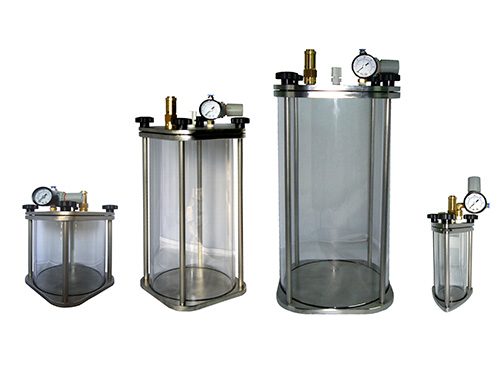
Which one fits depends on batch size and whether the fluid needs moving while it waits.
Blog
Articles and technical notes from SR-TEK's work in pharmaceutical.
SR-TEK is delighted to support a team from Pennsylvania State University in their studies to reduce major bottle necks in biopharmaceutical production. SR-TEK is providing our unique…
Read article →Pharmaceutical FAQ
Pharmaceutical
Viscosity, solids, solvents and the cleaning regime decide the material and the agitation. Those four are enough for a first proposal.
Request a quote316 for the ST Series, which is the grade we recommend for pharmaceutical work: it resists chlorides and the cleaning agents used between batches better than 304. Where the formulation must not touch steel at all, the vessel takes a PTFE liner or a PTFE-sleeved dip tube.
Yes — that is the STEL and STAG range, from 1 to 95 litres. An electric or air motor drives a stainless steel mixing element inside the pressurised body, so a suspension stays homogeneous while it is being dosed, not only while it is being prepared.
A regulated headspace pushes the fluid out at a constant pressure, so the volume delivered per unit of time does not drift the way a pump's does as it wears. Add a level probe and the vessel keeps that pressure across the whole batch rather than only when it is full.