

Fabrication · Test · Delivery
Bespoke builds
Custom Pressure Vessels
Vessels built around one process — capacity, ports, materials, liners and controls. The following are examples of product variations and customisations realised for specific applications and requirements. When designing an installation for a particular fluid application, or setting up a reliable controlled environment, the key is to maintain consistent control and measurement of parameters such as flow, vacuum, pressure and temperature across the system.
- Built for
- A single process
- Quantities
- Prototype to production run
- On this page
- Six delivered builds
From the workshop
RECENTBUILDS
Photographed before dispatch. Each one started as a standard SR-TEK vessel or a drawing from the customer.
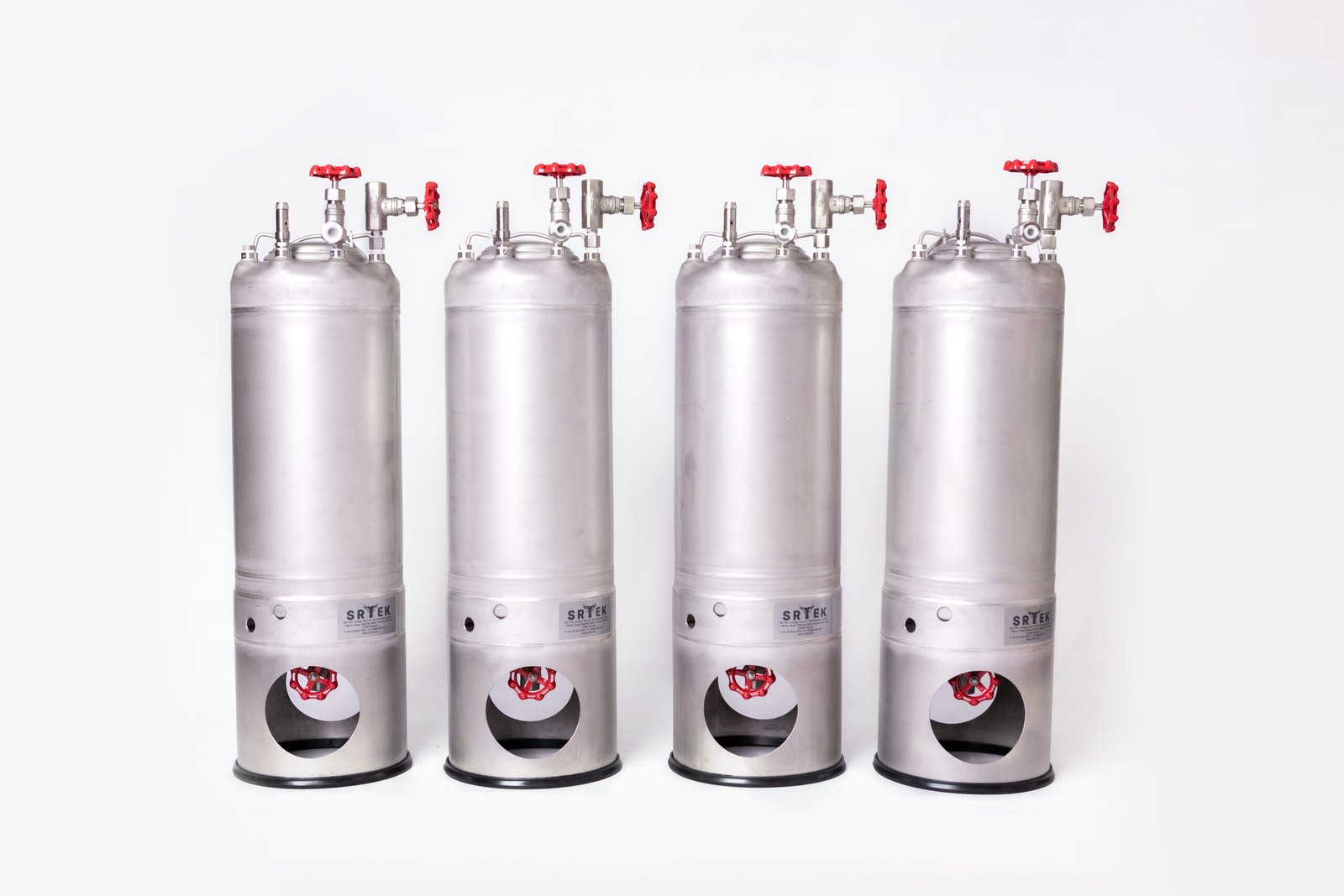
LT Series · SP028
Four 19 L feed tanks
Four stainless steel tanks built and tested as one set, each with its own isolation valve.
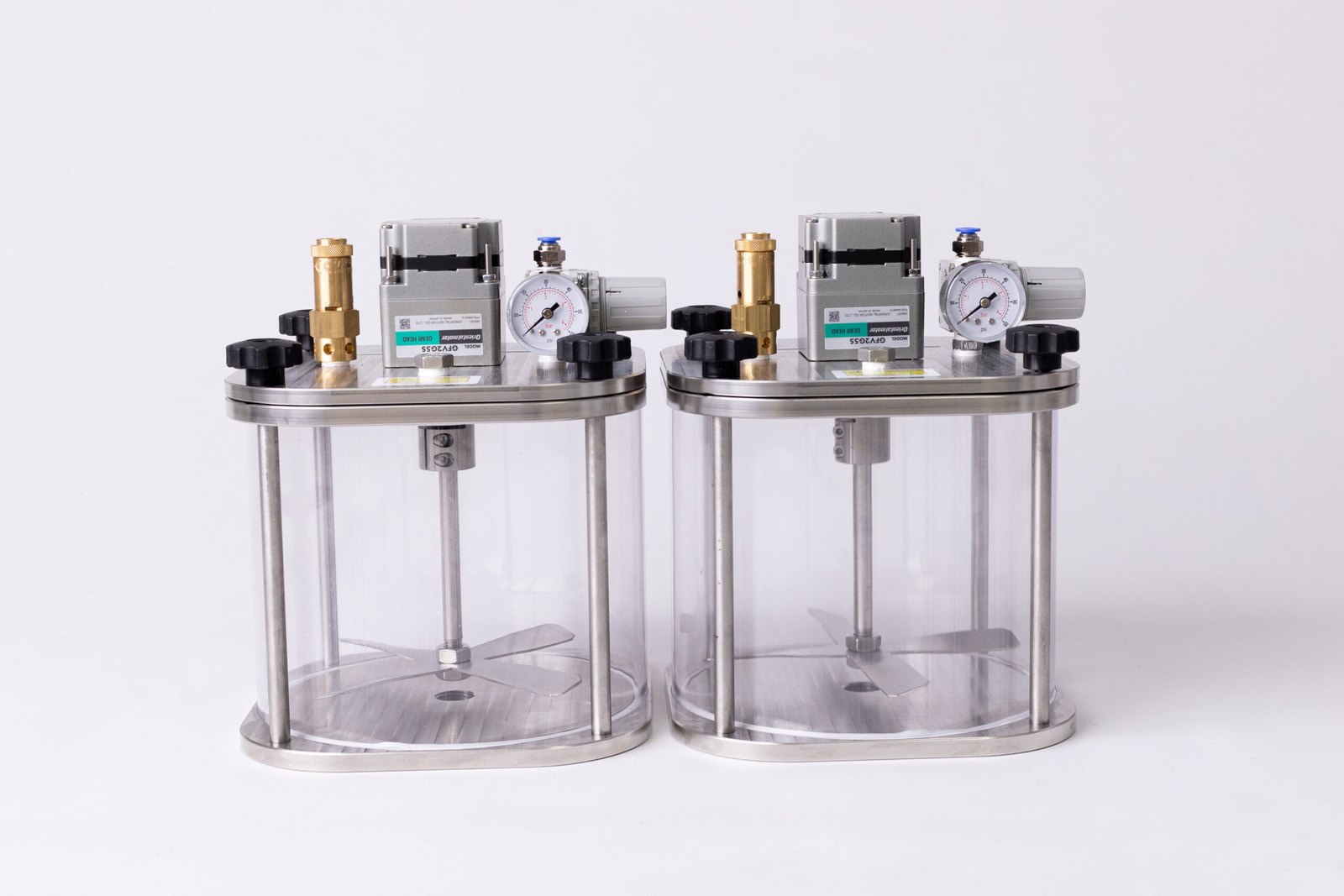
CTEL Series · SP177
Twin agitated 45 L vessels
Two transparent vessels with agitator drives and pressure gauges on the lid.
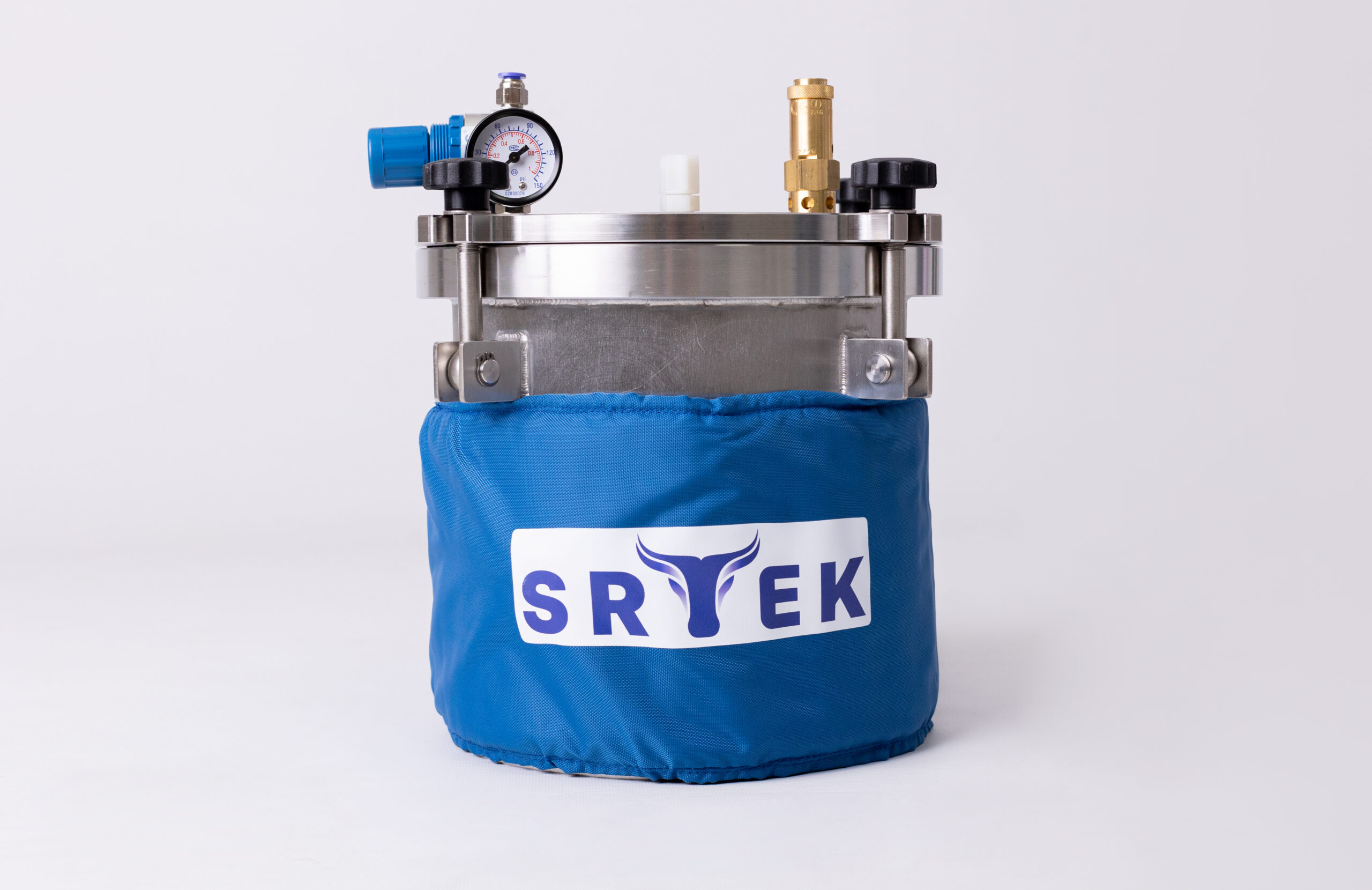
ST Series · SP161
10 L vessel with heating jacket
A stainless steel vessel fitted with an insulated heating jacket for a temperature-sensitive fluid.
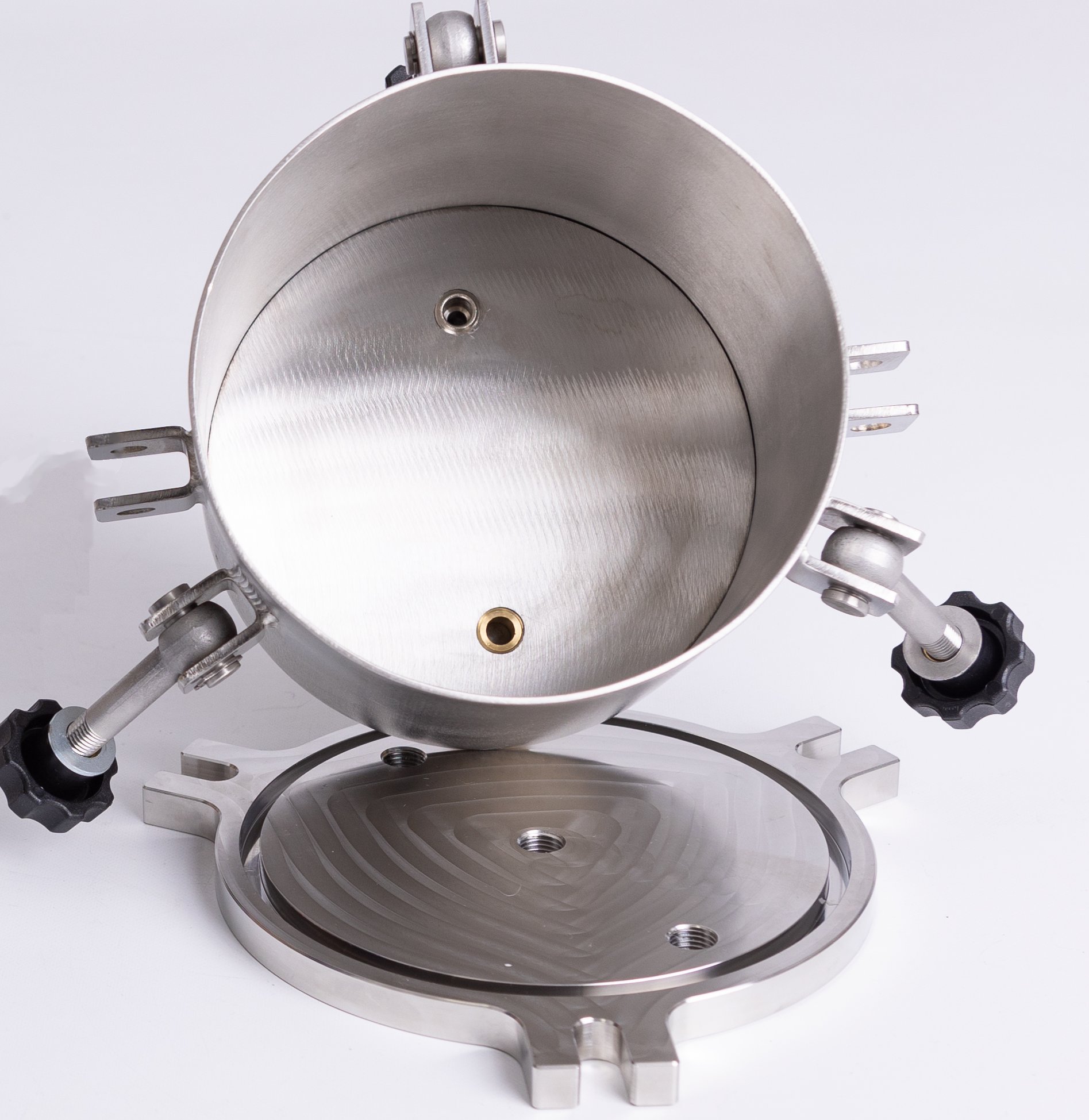
ST Series · SP192
5 L vessel, opened up
Shell, lid and base of a custom 5 L build laid out before assembly.


What can change
WHAT CAN BE CHANGED
Anything mounted on the vessel is open to change. If what you need is not here, it is worth asking anyway.
Delivered builds
DELIVEREDCUSTOM BUILDS
Each of these started as a requirement we had not built before. Everything listed was specified, fitted and tested by SR-TEK before the vessel shipped.
Two routes
TWO ROUTES TO ACUSTOM VESSEL
Most requirements are met faster by adapting something we already build. A custom vessel is the answer when the process will not fit a catalogue body.
Customisation
Start from a standard vessel
- Ports moved or added, PTFE liners, graduations, agitation, level sensing, heating jackets. The shortest route, and the pressure-bearing body is already proven.
Custom build
Start from your specification
- New geometry, a non-standard capacity, unusual materials or a fully instrumented system. Designed, built and tested around one process.
Before you ask
WHAT WE NEEDFROM YOU
Drawings are welcome but not required — a sketch and the figures below are enough for us to come back with a proposal.
| Capacity | Working volume in litres, and whether the vessel is filled by hand or from a feed line |
|---|---|
| Working pressure | Normal and maximum pressure in bar or psi, and whether vacuum is involved |
| Fluid | What sits in the vessel: viscosity, particles, solvents, temperature |
| Ports and fittings | Inlets, outlets, dip tubes, thread sizes and where they need to sit on the body |
| Materials | Any constraint on the wetted parts — 316 stainless steel, a PTFE liner, acrylic or toughened glass |
| Controls | Level sensing, pressure sensing, agitation, heating or cooling |
| Quantity and timing | A single prototype or a production run, and the date you need it by |
Custom build FAQ
TECHNICALQUESTIONS
How long does it take to build a custom pressure vessel?
It depends on how much of the vessel is new. A standard body with extra ports or a liner is the fastest route, because the pressure-bearing part is already built and certified. A new geometry with instrumentation takes longer: the design is reviewed before anything is cut. We confirm a lead time with the quotation, once the specification is agreed.
Can you modify a standard SR-TEK vessel instead of building a new one?
Yes, and it is usually the better answer. Most requirements are met by adding ports, a PTFE liner, graduations, agitation or level sensing to a catalogue vessel.
What drawings or data do I need to send for a custom vessel?
Drawings help but are not required. Capacity, working and maximum pressure, the fluid, the ports you need and any material constraint are enough for a first proposal. The table above lists everything we normally ask for.
Which parts of a standard vessel can be customised?
Ports and fittings, the lining, the cylinder markings, the lid, the agitation and the instrumentation. The pressure-bearing body stays as it was built and certified — everything attached to it is open to change.
Can a transparent CT vessel be fitted with extra ports?
Yes. CT bodies can be fitted with added ports, graduations or a CTG and CTS configuration.
Are customised vessels still covered by warranty?
Yes. The standard SR-TEK warranty applies: the products correspond with their specification at the time of delivery and are free from defects in material and workmanship for one year from delivery. A customisation carried out by SR-TEK is part of that specification. The full wording is in our Terms & Conditions.
Custom build
DISCUSS YOUR CUSTOM VESSEL
If the process will not fit anything in the catalogue, that is the enquiry our engineering team wants to see.
Request a quote