

Medical Device
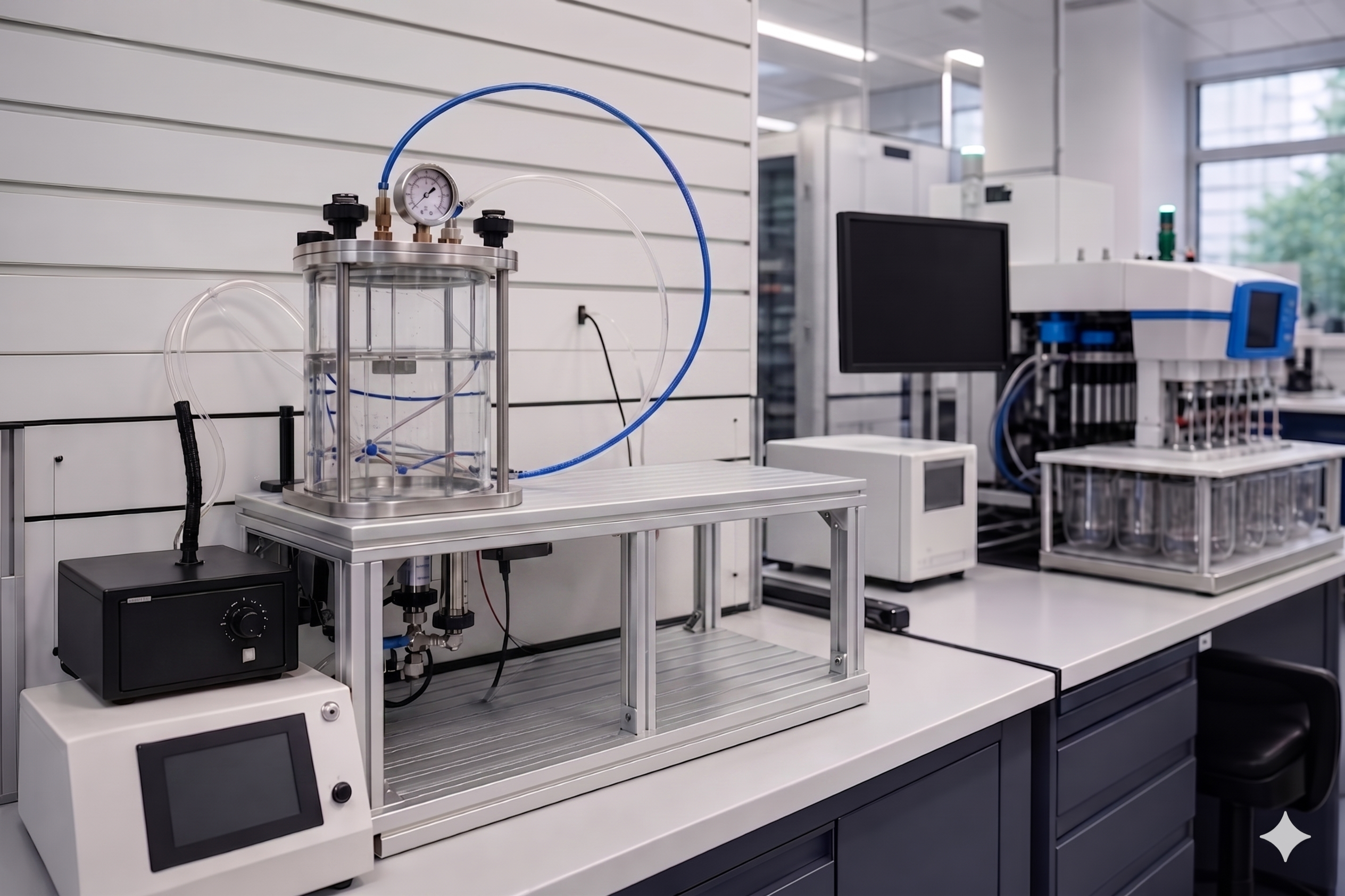
Device validation is about evidence, and evidence is easier to gather when you can see the failure happen. A transparent chamber turns a pass-or-fail number into an observation: where the leak is, when it started, and what the device was doing at the time.
Two test regimes
Most device programmes end up needing both, which is why the same body is usually specified for both duties.

Blog
Articles and technical notes from SR-TEK's work in medical device.
In medical device development, pressure testing plays a critical role in ensuring product safety, reliability, and regulatory compliance. Yet many conventional testing methods rely heavily…
Read article →Medical device FAQ

Medical device
Pressure

Vacuum
The device is sealed inside the vessel and the chamber is pressurised to represent the conditions being claimed — immersion depth, a sealed environment, or a specified cycle. What the test produces is evidence that the enclosure held, at a stated pressure, for a stated time.
Because you see the failure rather than infer it. A stream of bubbles identifies which seal or joint let go and at what point in the cycle, which is the difference between a failed unit and a design change you can act on.
Yes. Several delivered builds are dual vacuum and pressure chambers, with a dual gauge and the valve arrangement for both — one of them was supplied to a university for degassing materials before dispensing as well as testing.
The protocol tells us the chamber size, the pressure and whether vacuum is in scope.